The First Adventure

Adventure Dice has been something I’ve been thinking about for a long time and I was pleased to have finished them and intrigued to see what impact they would have on our behaviour. Charlie was excited to roll them and start our first adventure.

He rolled the Location Dice first. The trees side came up. We knew there was a small woodland nearby so decided to go there. Next came the Activity Dice. The play side came up. Charlie wanted to play Hide and Seek first, so that was the plan. If I’d told him we were going to the woods for a walk at 5pm at night he would have argued or complained. You can’t complain with dice, so that saved me some energy.

As soon as we left the house there was a different energy about what we were doing. We had a purpose. Charlie was bouncing. A complete change from sitting in front of the tv ten minutes earlier.

Once we got away from the roads and into the fields his energy soared. He was free to do whatever he wanted.
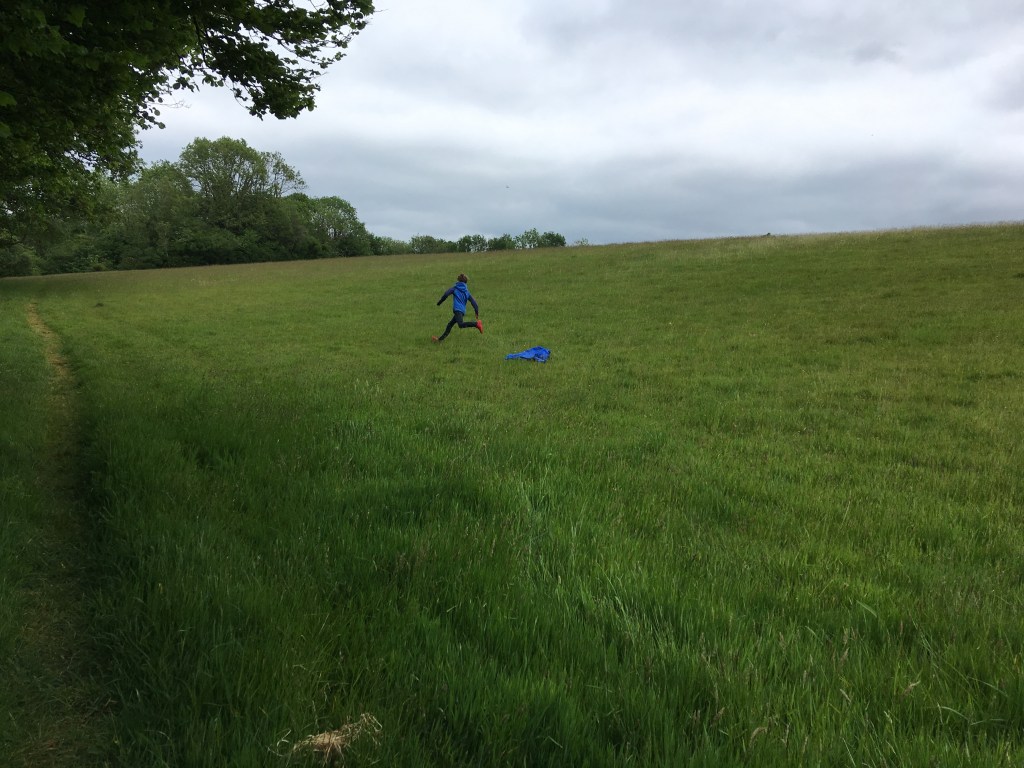
It was wonderful to see. He is eight now and I’ve got that constant nagging feeling that soon he won’t want to play, to run, to roll in the grass. But as long as we keep making these opportunities we can do it a little while longer.
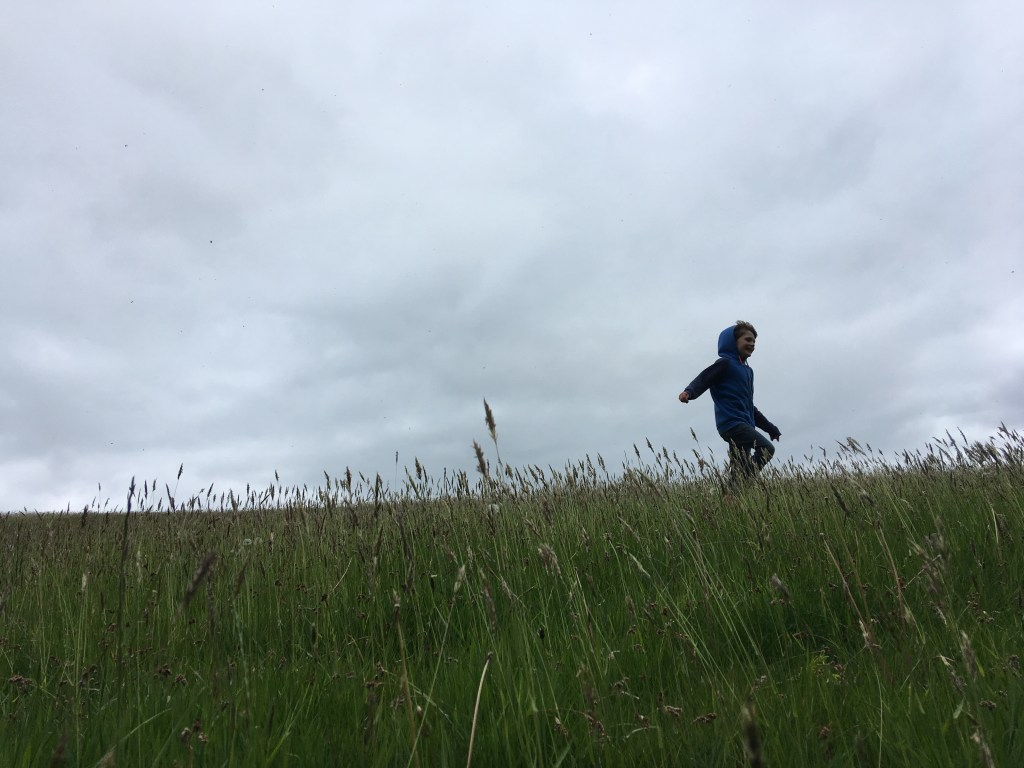
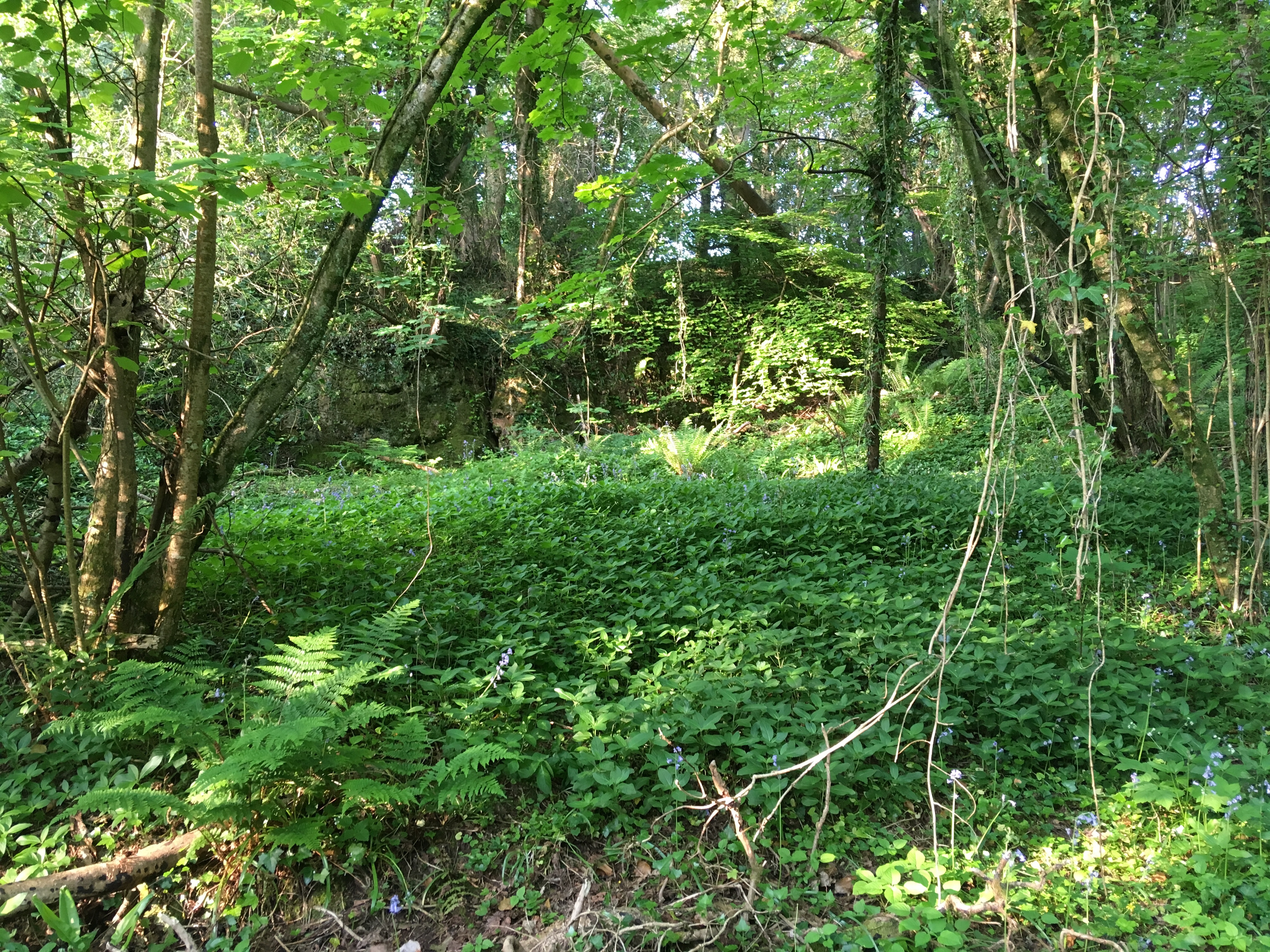
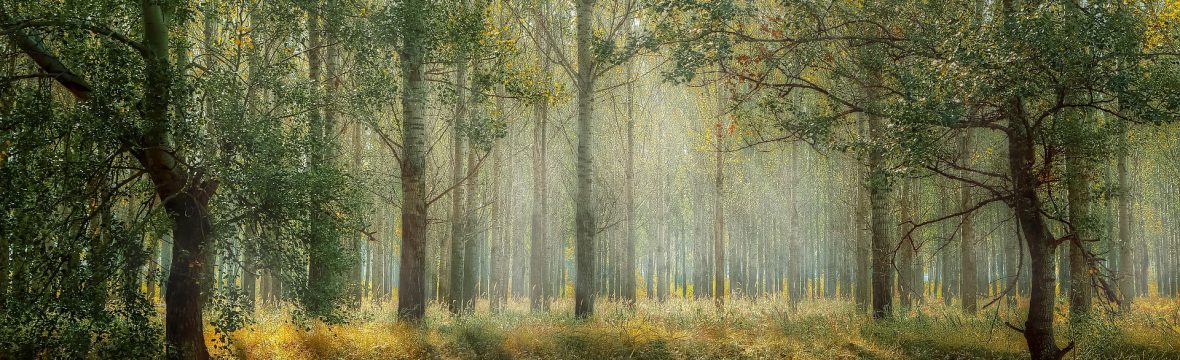
Once we entered the woods the anticipation was palpable. We’d never done this before. What would we do? How would it go? I was nervous and exhilarated at the same time. Charlie wanted to play hide and seek. In the past he’d been nervous of leaving paths in the dark let alone without me ( he has a wonderful imagination, which sometimes can be a hinderance to night time exploration). So I was a bit reluctant as the light was fading. But this was an opportunity we couldn’t let pass.

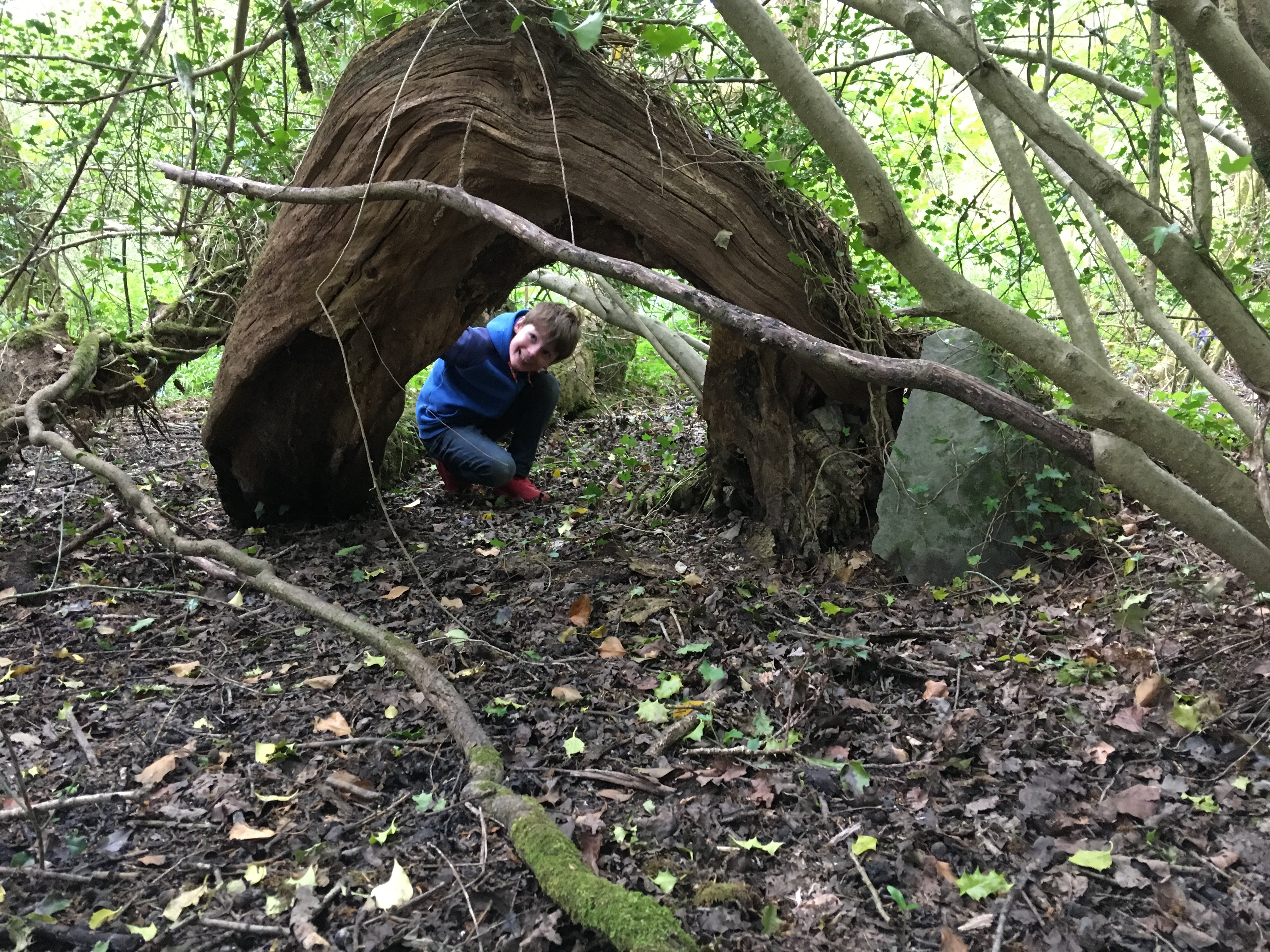
We had a fabulous half hour in amongst the ancient oak and hazel. Although Charlie could do with learning from his little brother how to count to twenty, the little cheat. Once we found each other we spoke about how we did it. Listening carefully, looking for tracks, stopping and waiting. We discussed how useful these skills could be when searching for animals (that’s a side of the Dice we are really looking forward to).

Next I wanted to try a different game, find the tree. I put Charlie’s coat hood over his face, turned him around several times then guided him blindfolded through the undergrowth. Normally he’d be reluctant to do this but just let me take him without question. I found an interesting tree and had him feel the bark. I told him to pay attention to the size, shape and texture. Did it have any moss or ivy? After a few moments we returned to the path. I spun him around for good measure then removed the hood.

His smile was wonderful. He stalked through the trees. Thinking, looking and stroking the bark. After a minute or so he hadn’t found it so we spoke about whether we went uphill or down. Does he remember having to step over anything? Where on his legs did the undergrowth brush? This discussion really got him into his senses and slowed down his thinking. I could see him settle and become more aware. He then wandered more thoughtfully and found the tree quickly. But rather than a euphoric ‘winning’ of the game he just seemed more satisfied with his developing awareness.

Next Charlie wanted to explore off the path.
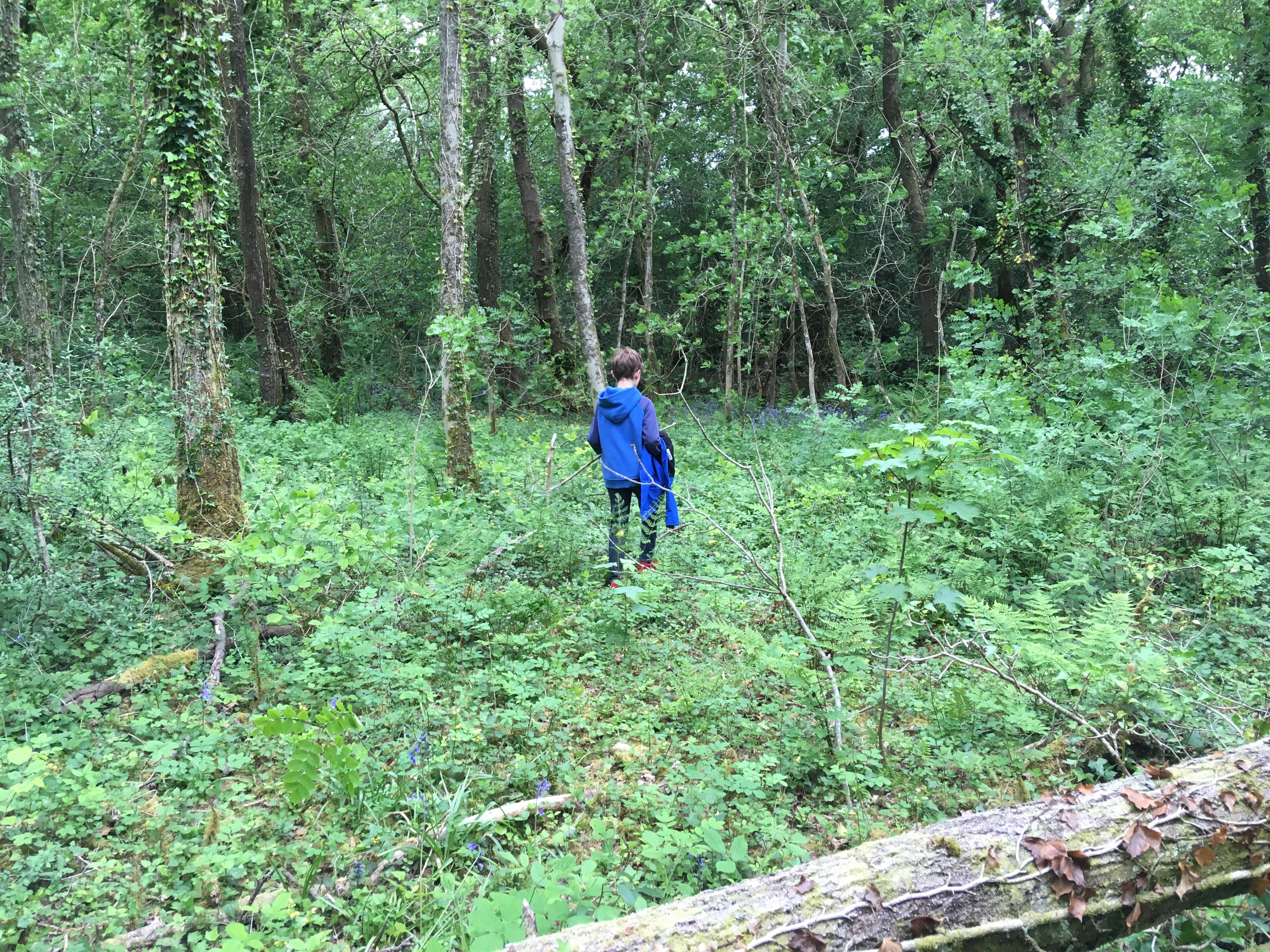
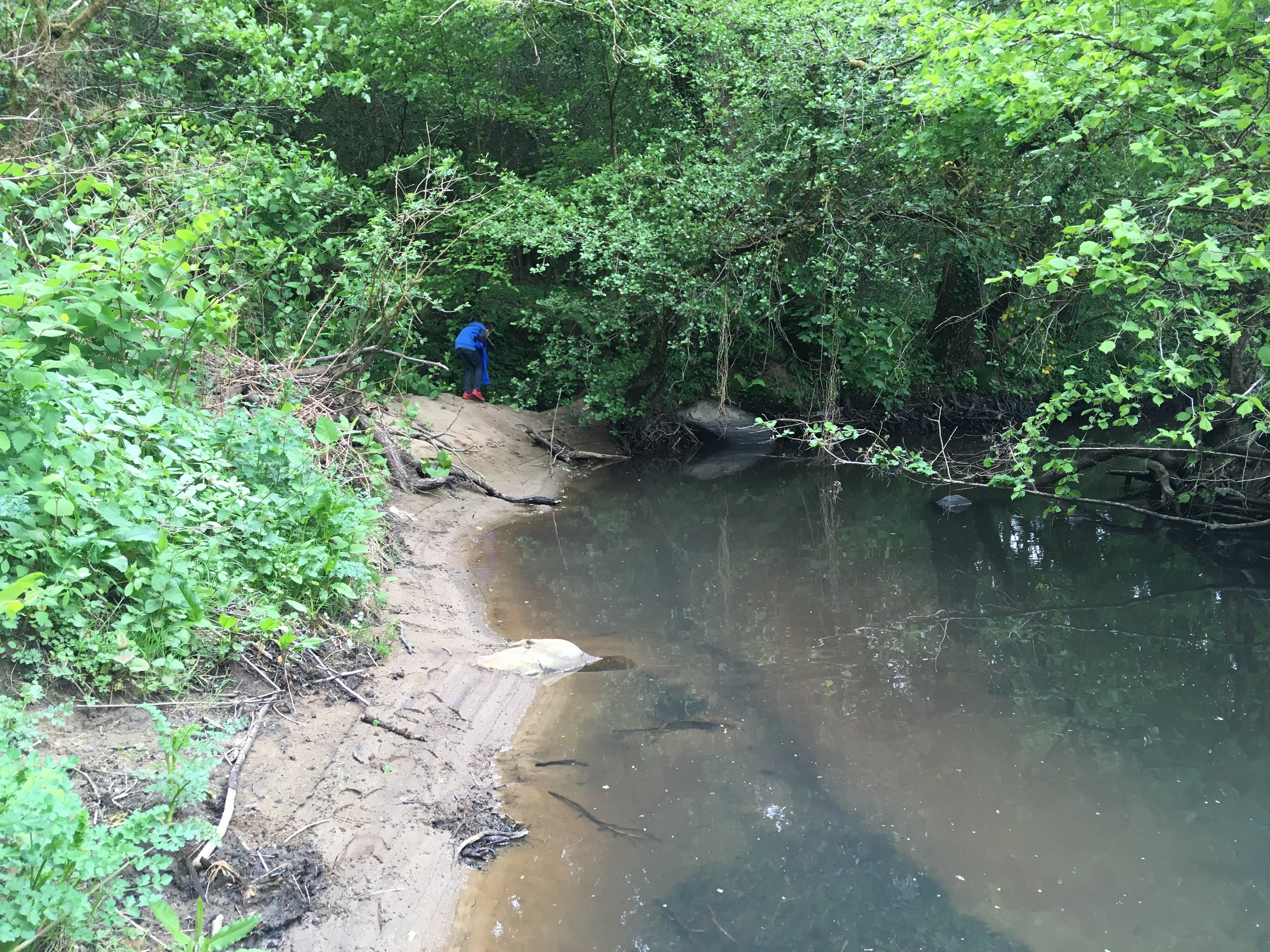
Even though this woodland is only a fifteen minute walk from home we had never been in this part of the wood before. We didn’t know where it led to or how far we would get. Charlie led the way and we walked for over fifteen minutes without seeing any sign of people. We were real explorers.
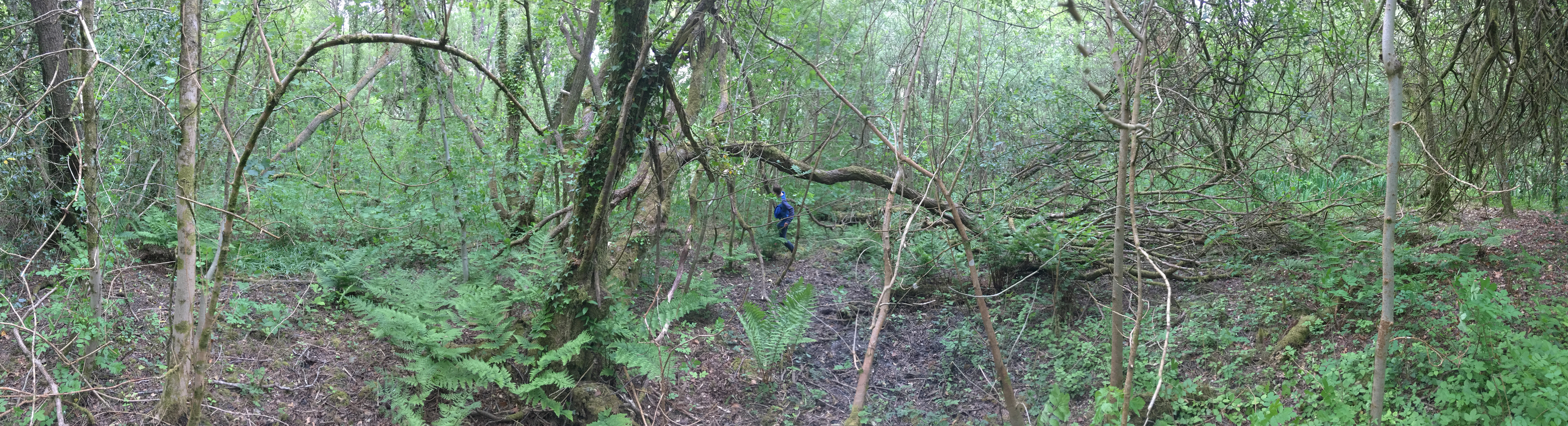
As we turned to return to the path. There was no obvious route. At one point we weren’t sure which way to go. We stopped and thought about where we’d been and where we needed to go. Charlie realised we’d been at a stream so would need to go uphill and because we left perpendicular to the path, if we continued in a straight line as best we could we would hit it at some point. A good little navigator he’s turning out to be.

There was a sense of relief when we managed to push through the brambles back to the path. We connected so much in that short time. A spring evening that otherwise would have disappeared without thought. We made the most of that wonderful time and I cannot wait for the next roll of the dice.

My Not to-do list revisited

It’s been a while since my original not to-do list post so I thought it could do with a refresher. Like all lists my Not to-do list is constantly evolving. Once not doing something becomes a habit it can come off the list and also lists change as our work and lifestyle changes. For example, I now freelance for two days and teach nursery for three days. When I wrote my original not to-do lust I was teaching full time in a year 6 class. So as roles change so do the things you should and shouldn’t be doing. Now my not to-do lust has a greater emphasis on my time out of the classroom.

Also, your not to-do list should be in descending order. So the activity that has the greatest negative impact should be at the top. So even if you just stopped this one thing it should have a great impact on your productivity and ultimately your life.

Although, as this has the greatest impact it could also be the hardest I’ve to quit. So it may be worth to try out some of the lesser activities on your list first to get those quitting muscles working. But make sure you’re not just doing this to hide from doing the one that might be the most difficult.

The mistake I made was not revisiting my list often enough. I felt I had a pretty good handle on most of it then just let it slide. I now schedule a check in with my not to-do list every month. That should give me long enough to know if I’m truly on top of something and can take it off my list as I don’t do it any longer out of habit or if it needs more work.

Here’s my current list:

1. Drinking alcohol in the week.

2. Staying up late and comfort eating.

3. Comfort eating

4. Not using a Pomodoro for work-based activities.

5. Randomly picking up my phone and checking email, bbc or social media.

6. Watching TV for the sake of it.

7. Allowing myself to become distracted when I should be working.

8. Leaving objects lying on the carpet / flat surface.

9. Not having a clear focus for what I want to get done.

Simply writing the activities down may help bring them to light and this in itself will help to stop them. But I’ve found that many of the activities near the top of the list are often deeply ingrained habits that are difficult to drop so require a concerted effort and external support. So how best to make sure you can stop them for good?

Make it public

Share your goal with someone. Even better, do it online and make yourself accountable.

Associate pain to not changing

What will happen in your life if you don’t stop the activity that you’re focussing on? Really home I’m on the worst case scenario. Research shows that when it comes to the carrot and the stick, the stick wins every time so make it a big one to get yourself moving. In my case if I continue to drink excessively during the week, at the very least I will feel lethargic, will struggle to get up in the morning and get things done, like this blog. I’ll continue to gain weight and this will be compounded by the associated comfort eating late at night. My immune system and liver function will be affected and I will be at greater risk of cancer. Ultimately, I’m cutting my life short and robbing my family of a husband and father. Besides all this I’m setting a terrible example to my boys who will grow up thinking that it’s normal to drink on a daily basis.

Seeing this written down in the knowledge I’m going to make it public makes me feel nervous, but hopefully it will contribute to me achieving goal and stopping this damaging habit.

Make it StickK

StickK is an incredibly useful app that allows you to make a contract with yourself, identifying your goal and associating a financial cost if you don’t meet it. What makes it even more powerful is you can choose where this money goes. It can be to someone you know or even more powerfully, an anti- charity. I’m much more likely to stick to my new behaviour if I know that failure to do so will take money directly from my bank account to fund Donald Trump, the National Rifle Association, or on a more trivial level, Manchester United. You can also include a referee who will hold you accountable, verifying if you’ve stuck to your commitment. I’ve used it before for healthy eating and set the amount at £20 per week. It’s not a huge amount but enough to make me stop and think if that chocolate bar is worth £20? Invariably it’s not and giving myself the time to pause is often enough to realise I don’t need it.

So hopefully using these strategies can help me stop destructive activities giving me space and energy more important things in my life.

Other People’s Heads

lego-4380126_960_720

Driving into work this morning I started to ask myself, ‘Why do I do the things I do?’ A broad question I know, but this wasn’t the time for deep thinking. I’d had a late night and a screaming 3 year old who does NOT like sun cream ( I started this post when it was hot, apologies if it’s raining now.)

I came to the conclusion that a lot of what I do is to get other people to ‘like’ me, to judge me in a positive way, to ‘approve’. I realised that I spend a hell of a lot of time ( way too much) worrying about what was going on in other people’s heads. Seeing this written down makes me realise how ridiculous this is. I can’t control what they think. I can’t see what they think. And how presumptuous of my ego to even think that I’m important enough for them to spend more than a nanosecond thinking about (or judging) me. What’s more likely is they are going around thinking exactly the same about themselves. So it seems quite surreal that we are all wandering around, going through our day, worrying about what’s going on in each other’s heads, when in fact we shouldn’t give it a moment’s thought.

Stories (a rant – mainly at myself!)

Reality is negotiable. Your life is what you make it.

What we experience as life is a series of stimuli and how we respond to them. How we respond is determined by the stories we tell ourselves. None of them are true. They are what we make them. Almost all of our stories are formed at an extremely young age. We mirror the stories of our parents, family and community. They have been running for so long that they are practically automatic and we are hardly aware of them at all. We simply take them to be true, when they are anything but.


Make space between stimulus and response. Be the witnessing presence to the story that instigates the automatic response. Hold it up to the light, scrutinise it.  Does it help you? Does it hinder you? Does it move you towards your goals or away from them?


No stories are real so you are free to choose your own. Choose stories that empower you. Shape reality to suit you. Be aware of your stories, write them own. In order to rewrite them you first need to recognise your faulty stories.


Life. It’s the sum total of your experiences within reality. You can have a small life or a BIG life. This is all determiend by your stories, your recognition of them, your response to them and your choice of story.


Stimulus ⇒ What does this mean to me? What else could this mean? ⇒ Choose your response.


Never attribute to malice that which is adequately explained by stupidity.’ – Hanlon’s Razor


You always have the power to choose your response.


Everything you see around you in this thing we call life was created by somebody no smarter than you.’ – Steve Jobs


Recognise this fact and realise that you can create something for other people. That you can build a life for yourself that fits your authentic self, not the one that your malfunctioning stories have created.


You have the knowledge.


You have the tools.


You just need to move, to take action.


Fear will try to hold you still, but this is just one of your stories. Write it down, scrutinise it. Realise it is ridiculous and does not serve you. By writing it down you lessen its power over you. But also realise that the fear will never truly go away. You have to learn to ‘dance with the fear’ (Seth Godin).


Work out what you want.


Don’t limit yourself.


Plan how you will get it.


Watch how you respond as you write it, think about it. This will give you an idea of your limiting beliefs, of your faulty stories.


Not to-do lists

img_6033


Everyone has a to-do list. The projects, chores and activities that nag at the back of your mind whenever you’re engaged in something that doesn’t grab your attention. So you write them down, good thinking, and get to work, commendable.

But what’s just as important as what we spend our time and attention on is what we don’t spend it on. It’s amazing when you really pay attention, how many moments throughout the day we waste on busy work, inane gossip, meetings that go round in circles, TV, social media, the list goes on and on.

That’s where ‘not to-do’ lists come in. Think about your top time (and attention) wasters. Do an 80/20 analysis. What activities, habits, people (yes, especially people) serve little or no purpose, allow you to feel busy without moving forward, or are your biggest aids to procrastination. Write them down, put your biggest miscreants at the top. Keep that list in your journal, on your desktop, anywhere where you will see it regularly. Choose 1 or 2 at a time and really work on removing them from your life. Then move onto the next.

I was really guilty of being busy without being productive for a long time as a primary school teacher. Early mornings and late nights were the norm, no time or attention.

Here’s my not to-do list:

  • Morning meetings
  • Asking permission to do something
  • Writing lots in plans
  • Surfing the net when planning
  • Dropping everything to sort other’s IT issues
  • Chatting when photocopying
  • Chatting when I should be in class
  • Leaving maths marking to the last minute
  • Dumping piles of paper on my desk
  • Trying to tidy up
  • Putting things down in random places
  • Keeping things I don’t need
  • Going to all assemblies
  • Bringing marking home
  • Sorting out every little problem
  • Charging around the school for no reason
  • Trying to find or make the perfect resource

I found that once I saw these things written down it made them easier to stop. They were no longer unconscious actions. This list developed my focus and awareness. It got me asking the question ‘Am I being productive or just busy?’

Removing old habits became much easier, and by doing so it gave me the space, both in time and attention, to focus on what was truly important.

Make it work for you, internalise it, and you will find that what you don’t do can be more important than what you do.

This activity is worth revisiting periodically, usually every quarter. You become more aware of your habits and as they change, your not to-do list will evolve and become more refined (and hopefully shorter!)

Hope you found this helpful. Get outside and go Barefoot.

Steve.

Fear

This wasn’t going to be my first post. In fact, it wasn’t even on my agenda at all. It was only when I asked myself why, even when there were people interested in what I had to say, hadn’t I sent out my first newsletter? I was scared. Scared of getting it wrong. Scared of what people would think of it, of my ideas and ultimately of me.

Stressed, overwhelmed, stuck, worried, scared. They are all fear. It comes from the Amygdala, the lizard brain. It is the oldest part of the brain. A small golf ball-sized mass at the top of our brain stem. It’s job is to help keep us safe. This was great when we first evolved, when the prospect of death was a daily occurrence. A surge of adrenaline, fight or flight, was incredibly useful when facing a sabre-toothed tiger, bear or snake. Unfortunately, this part of our brain is still stuck 2,000 years BC. Rarely do we need such responses. Even more unfortunate, the Amygdala cannot discern between a sabre-toothed tiger and a PowerPoint presentation. It will kick in in an attempt to keep us, our sense of self, safe.

Fear no longer keeps us safe, it keeps us comfortable. It will do everything it can to keep things as they are. This prevents growth and encourages stagnantion. Anything worthwhile is done in spite of fear not because of it.

We convince ourselves that if we keep on preparing, planning, journaling, meditating then, when we are truly ready, the fear will somehow disappear and we will move forward and get the creative work done. It doesn’t work like that. All of the other activities that we tell ourselves are part of the preparation are merely distractions. Preventing us from doing the work that we really needs to be done.

Steven Pressfield calls this ‘Resistance’ and explains it eloquently in his book ‘The War of Art’. All these actvitiies, the feelig in our stomachs, even the quiet voice at the back of our heads. They prevent us from doing our real work. They prevented me from writing this post. They resist.

Unfortunately, no matter how preparded you are you will never feel ready to do the work. You just need to do it. You will never feel ready. That is Resistance. You just have to move forward. Do the work. The fear will never go away. Pressfield describes using fear as a compass. It will oppose directly the most important thing you need to do. The more important or impactful the work, the greater the resistance. The closer you get to completing the work, to sharing it with the world, the greater the Resistance. That is how I feel typing this and I’m sure it will only intensify just before i press ‘send’.

But we must realise that when we have that feeling in our stomachs. The butterflies, the queasiness, the Resistance. That means we are about to do something worthwhile. It isn’t a signal to stop, it’s a signal to move forward, to accelerate. Jocko Willink, the former Navy Seal Commander describes it as ‘Violence of Action’.

After we have done it once we tell ourselves it shoudl get easier, but it doesn’t/ We need to push every day. We still have to fight the Resitance through every worthwhile endeavour. But better than that, we need to follow Seth Godin’s advice and dance with the fear as it will never go away.

Two things that have helped me greatly have come from stoic philosophy and were shared by the author Tim Ferriss.

Define Your Fear

When fear is an abstract concept it’s easier to let it affect us. To let it become this huge intangible that freezes us. But if we can define our fear in as much detail as possible we come to realise that it is often ridiculous and absurd. Try this exercise.

Take a sheet of paper and split it into three columns. Use the following as headings for each column:

Define – Define your fear in as vivid detail as possible. What is the worst case scenario if you do the thing that you are putting off. Give it a scale of 1-10.

Minimize – What could you do to minimize the impact of column 1 or to reduce the likelihood of this happening?

Repair – What could you do to repair the damage of column 1? What would you have to do to get back to where you are now?

On a second page write down all the positive outcomes of doing the work. Rate them from 1-10.

Look at your answers and scores. The possible downsides are often temporary and unlikely, with a low rating and the more likely positive outcomes are a much higher rating.

Then ask yourself the following questions taken from Tim Ferris’ fantastic blog:

1. What is it costing you—financially, emotionally, and physically—to postpone action? Don’t only evaluate the potential downside of action. It is equally important to measure the atrocious cost of inaction. If you don’t pursue those things that excite you, where will you be in one year, five years, and ten years? How will you feel having allowed circumstance to impose itself upon you and having allowed ten more years of your finite life to pass doing what you know will not fulfill you? If you telescope out 10 years and know with 100% certainty that it is a path of disappointment and regret, and if we define risk as “the likelihood of an irreversible negative outcome,” inaction is the greatest risk of all.

2. What are you waiting for? If you cannot answer this without resorting to the previously rejected concept of good timing, the answer is simple: You’re afraid, just like the rest of the world. Measure the cost of inaction, realize the unlikelihood and repairability of most missteps, and develop the most important habit of those who excel and enjoy doing so: action.

Practising Poverty

This exercise was first described by the stoic philosopher Seneca. He explained it as,

Set aside a certain number of days, during which you shall be content with the scantiest and cheapest fare, with course and rough dress, saying to yourself the while: ‘Is this the condition that I feared?’

Often, when making big decisions we worry that we’re going to lose money an d be unable to afford food, clothing and all of the trappings associated with a comfortable lifestyle.

So try this exercise. For three days wear the same cheap clothing, eat simple cheap meals or even fast. Drive less, don’t watch television and avoid using technology or use public WiFi. While doing this constantly ask yourself, “Is this what I am so afraid of?” You’ll find it’s n it as big a deal as the resistance would have you believe.

By practising your biggest fear you begin to inoculate yourself against it, you remove its power. You can move forward with your big ideas, projects and dreams.

I hope these ideas help. Let me know what you think and share any ideas or feedback on our ides4time Facebook page (using public wifi if you’re practising poverty)

All the best, Steve.

Bats

Glimpsing an elusive animal in its natural habitat is usually something we imagine to be the preserve of the dedicated naturalist, camped out for days on end in some remote desolate wilderness with only their obsessive dedication, bloody-mindedness and freeze-dried rations keeping them going. But this simply isn’t the case if you know where to look.

Charlie and I took a stroll at sunset up towards old Llantrisant through the woods behind our house. We settled down on a picnic blanket, plastic-backed to avoid the wet ground (well it was Wales in September, after all) and listened, watched and waited. It is a wonderful thing to get a 5 year old to sit still and quietly for even a few minutes, but Charlie demonstrated surprising composure and restraint when I had half expected him to be either yelling that he couldn’t see anything or complaining that he was bored, hungry, tired or all of the above. We whispered about what we could see: the treeline leading up to the cloud covered sky, various lights in the distance and what they were, and various settlements in the distance. We also spoke enthusiastically about what we could hear: the call of Blackbirds and Robins (he is beginning to distinguish between them) and what they might be saying, the staccato drips of water falling from the canopy and the occasional excited rustle in the undergrowth of unseen animals. But the real reason we were there were bats. Charlie was desperate to see them, and this was the first opportunity we had had for a while, even if it was a Sunday night before school the next day.

I gave him my head torch to make him feel more comfortable on the walk through the woods. It definitely helped. Any previous nocturnal excursions had been curtailed due to slight panicking about what might be out there. But tonight’s trip went with only the slightest murmur of being scared, that was quickly replaced with the anticipation, enjoyment and excitement of our mini adventure. Getting Charlie used to being out in nature at night near home is a fantastic precursor to longer, more demanding nighttime journeys, as well as wild camping. Something he has been keen to do but quite reluctant when the time came.

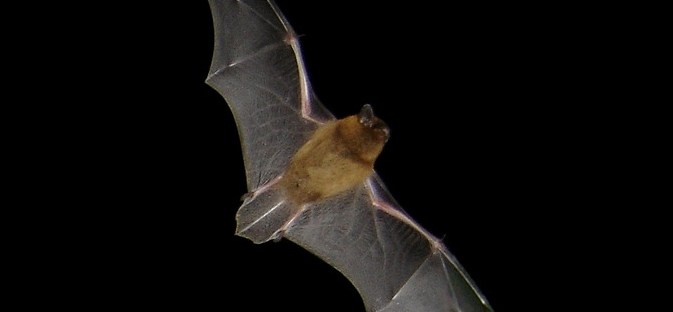
We sat for little more than half an hour and stared intently at the treeline scanning for any movement and the tell-tale curved wings of our furry insect-loving friends. We had a few fleeting glimpses of small shadows darting and curving over the trees. Charlie sometimes doubted he had seen anything, they were that quick. But once he became accustomed to their flight patterns he picked them up quite quickly and his whispers became increasingly excited at the sight of these Pipistrelle (probably) or Brandt’s (possibly) bats.

As we carefully made our way down through the steep muddied woods Charlie was filled with excitement. To see something so elusive and special only 10 minutes from home had him captivated and desperate for more. His fear of the dark forgotten for now and our bond made greater still. I loved every second and can’t wait to get him back on the hillside, with his hand in mine and the sun silently slipping below the horizon.

The National Trust – Bats

Bat Conservation Trust


Barefoot, a manifesto

What I believe
I believe that the trappings of a consumer economy are trapping us. I believe we are bogged down under our possessions that they possess us rather than us possessing them. I believe that we need to strip away the good in order to achieve the excellent. I believe that enlightenment is only possible by stripping away everything that we do not need. I believe there to be elegance in simplicity. I believe lazy thinking and indiscriminate action are to blame for almost every one of our problems. I believe that genuine connection with my children is the most important and amazing thing I can do with my life. To bring them up to be reflective, passionate, responsible members of the world. I believe we need to reconnect with nature in order to live life to the fullest. I believe that we do not need to shun technology altogether but we need to be more selective. Yes use, social media, but with precision, to add value, to ourselves and others. Not mindlessly scrolling in a habitual manner. If it does not change you, if it does not move you. It is only a distraction. I believe we are happiest when we know that what we own, do and think about bring us immense value then we live a much more content life. I believe that in order to achieve this you must know yourself intimately and you must love yourself as much as you love anyone else in your life.
I believe that you become a reflection of your mind. What you achieve in real life must first be achieved in your mind. People are the average of the five people they spend the most time with. I believe fear is the single biggest cause of procrastination and inaction.
 
I want to teach people that they do not need the volume of possessions that they own. That the majority ‘good’ possessions block their ability to use the few ‘great’ possessions as tools to facilitate an extraordinary life. I want to change people’s perceptions of themselves to allow them to truly recognise who they are, what their strengths are and what they need to have, do and think in order to make themselves most happy.
I want to spend my life outdoors with my boys. Sharing experiences with them and helping them understand themselves and the people around them. I want to teach them meditation and I want to teach children around the world skills to help them stand proud yet humble in the world that they create. I want to create a toolkit to give teenagers a way of navigating through their ‘hormone-ravaged’ years and come out the other side stronger, stable and reflective individuals who truly know who they are and what their purpose here is. I want to show other parents how they can spend time with their children enjoying the wonders of nature right on their doorstep and to realise how such simple shared experiences can be epiphanies in their relationships. I want to inspire dads to see how they can change their habits, routines, lifestyles and careers to achieve more of what they want in life while enhancing their relationships with all those around them. Career and family are not a dichotomy that are mutually exclusive but can be, initially balanced, then enhanced through honest reflection and fearless action.
 
 
I know this to be true
If a possession does not serve you then it is a waste of your time / energy.
We arrive on this earth with nothing and we leave with nothing. Our only meaningful legacy are the lives we touch along the way.
Our breath impacts so many aspects of our lives and is a tool vastly under appreciated.
We need surprisingly little to be happy.
‘When would now be a good time?’ – Tony Robbins – Procrastination, fear prevent us from taking action, do it now.
Make your bed – Celebrate the small wins.
Be grateful – You cannot hold any negative emotion if you are grateful for what you have.
‘Will this matter a year from now?’ No, it won’t. Stop worrying about it.
‘Define your fear’ – Turn the abstract into the concrete and its power over you will diminish.
Anger does more harm to the vessel that carries it than the person it is focused on.
You cannot worry about what other people think – They are so self-consumed that they won’t be thinking about you anyway.
You will regret far more things that you didn’t do than things that you did.
The mind and body are linked, one inevitably influences the other. You need to move both.